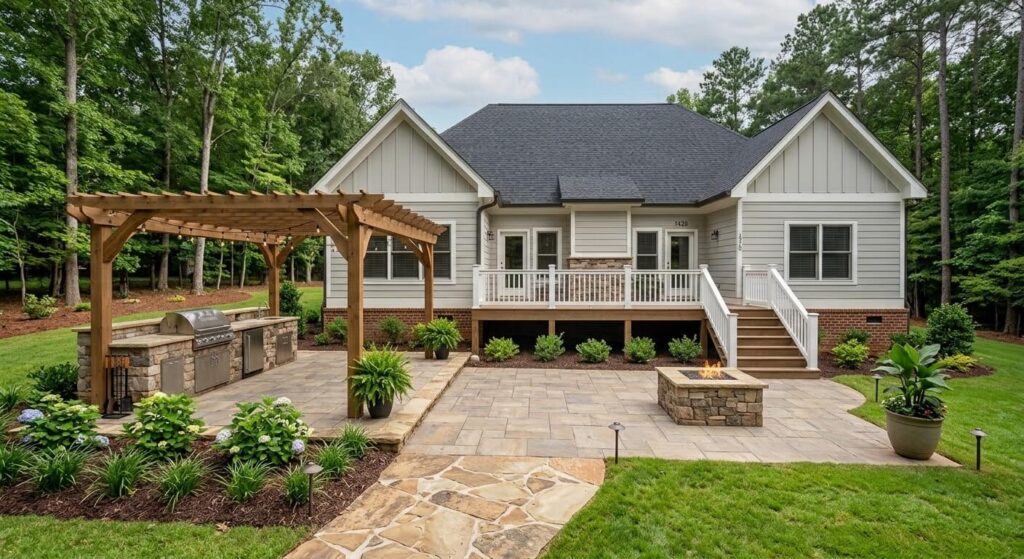
Do you wish your backyard had more room for outdoor meals, family gatherings, or comfortable seating? A patio extension can transform an underused portion of your yard into practical outdoor living space. Able Concrete of GA helps homeowners create durable concrete surfaces designed around how they want to use their outdoor areas.
Instead of replacing an existing patio, extending it can provide additional square footage while maintaining the foundation of the current outdoor space. But before starting the project, homeowners should consider the layout, drainage, materials, and intended use.
Why Extend an Existing Patio?
One of the biggest advantages of a patio extension is that it can increase usable outdoor space without requiring a completely new backyard design.
A small patio may be adequate for a couple of chairs but become difficult to use when you add a dining table, grill, fire pit, or additional seating. Extending the slab can create enough space to accommodate these features while keeping the original patio functional.
An extension can also help create distinct outdoor zones. For example, one section could be used for dining while another provides space for lounging or grilling.
How Much Space Should a Patio Extension Add?
The right size depends on how you plan to use the space.
If the goal is simply to add a few chairs, a modest extension may be sufficient. If you want an outdoor dining area, remember that the table itself needs room, along with enough clearance for people to comfortably pull out chairs and walk around it.
For homeowners planning a grill station, outdoor kitchen, or large seating arrangement, additional space may be necessary. Planning these features before pouring concrete helps ensure the finished patio is large enough for its intended purpose.
What Should You Consider Before Extending a Concrete Patio?
Before construction begins, evaluate the existing patio and surrounding property.
The contractor should consider the condition and elevation of the current slab, the proposed extension area, soil conditions, drainage, and how the new concrete will connect with the existing surface.
Drainage is particularly important. The finished surface needs an appropriate slope so rainwater moves away from the home rather than collecting near the foundation.
The extension should also complement the existing patio. Differences in concrete color or finish may be noticeable, particularly when the original slab has weathered over time.
Can a Patio Extension Improve Outdoor Entertaining?
Absolutely. Extra patio space can make outdoor entertaining significantly more comfortable.
A larger surface can accommodate dining furniture, lounge chairs, umbrellas, grills, and other outdoor features without forcing everything into one crowded area. It can also provide more flexibility when hosting guests.
According to the U.S. Environmental Protection Agency, managing stormwater where it falls—including through appropriate site design and permeable approaches—can help reduce runoff and protect local waterways. While a conventional concrete patio is not itself a green-infrastructure system, drainage and site planning remain important considerations when expanding hardscape around a home.
What Type of Concrete Finish Should You Choose?
The appearance of the new patio can be customized in several ways. Homeowners may consider a traditional smooth finish, broom finish, decorative patterns, borders, or stamped concrete.
The best option depends on the style of the home and the desired appearance of the backyard. A simple finish can provide a clean, understated look, while decorative concrete can create more visual interest.
It is also worth considering maintenance. Outdoor concrete is exposed to rain, temperature changes, dirt, and everyday use, so selecting an appropriate finish and maintaining the surface can help preserve its appearance.
Does a Patio Extension Require Professional Installation?
A patio extension may appear straightforward, but proper preparation is important for long-term performance. The ground needs to be appropriately prepared, forms must be accurately positioned, and the concrete needs to be placed and finished correctly.
The connection between an existing slab and a new section also deserves careful attention. Poor preparation or drainage can contribute to cracking, settling, or water-related problems.
Working with an experienced concrete contractor can help homeowners evaluate the site and determine the appropriate approach before construction begins.
If you’re considering a patio extension in Dallas, GA, Able Concrete of GA can help you create additional outdoor space for relaxing, dining, and entertaining. Call (404) 694-8473 to discuss your project and explore concrete solutions for your property. With thoughtful planning and professional installation, a patio extension can make your backyard more functional and enjoyable for years to come.