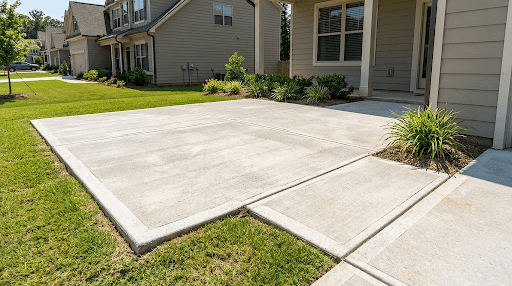
What Makes a Concrete Slab Last?
A concrete slab may look simple once finished, but its long-term performance depends heavily on what happens underneath and around it. For homeowners considering concrete slabs, factors such as soil conditions, drainage, reinforcement, slab thickness, joints, and curing can all influence the finished result.
A professional concrete contractor can evaluate the project site and determine an installation approach appropriate for the intended use. Able Concrete of GA helps homeowners and property owners with concrete projects designed around practical use, site conditions, and long-term performance.
Why Is Site Preparation So Important?
One of the most important steps happens before concrete arrives.
The ground beneath a slab needs to be properly prepared and compacted. If the underlying soil is unstable, poorly compacted, or affected by excess moisture, movement can contribute to cracking or settlement over time.
Site preparation may include removing unsuitable material, grading the area, compacting the subgrade, and installing an appropriate base material.
The exact preparation depends on the property and the intended purpose of the slab. A slab supporting a small outdoor structure, for example, may have different requirements from one intended for vehicles.
How Thick Should a Concrete Slab Be?
There is no single thickness that works for every concrete project.
A pedestrian patio, residential driveway, equipment pad, and structural foundation can have significantly different design requirements. The expected loads, soil conditions, reinforcement, local conditions, and intended use should all be considered when determining the appropriate slab design.
Rather than selecting a thickness based solely on what worked for another property, homeowners should have the project evaluated according to its specific purpose.
This is particularly important for slabs expected to support vehicles, heavy equipment, or structures.
Does Concrete Reinforcement Prevent Cracking?
Concrete is strong in compression but has limited tensile strength, which is why reinforcement can be an important part of many slab designs.
Depending on the project, reinforcement may involve welded wire reinforcement, reinforcing bars, or other appropriate methods. Reinforcement does not guarantee that a slab will never crack, but proper design can help control cracking and improve structural performance.
Control joints are another important consideration. Concrete naturally undergoes changes as it cures and responds to temperature and moisture. Properly planned joints can help control where cracking occurs.
Why Does Drainage Matter for Concrete Slabs?
Water is one of the most important factors to consider when planning outdoor concrete.
A slab should generally be designed so that water does not collect against the surface, nearby structures, or the foundation. Proper grading can help direct runoff away from areas where standing water could create problems.
Canton properties can have varying slopes, drainage patterns, and soil conditions, so a site-specific evaluation is valuable.
Before installation, homeowners should consider where rainwater will go after the slab is completed. A beautiful patio or driveway can become a maintenance problem if surrounding drainage is overlooked.
How Long Does Concrete Take to Cure?
Concrete does not simply “dry.” It undergoes a hydration process that allows it to gain strength over time.
The American Concrete Institute notes that curing is essential for maintaining moisture and temperature conditions that allow cementitious materials to develop desired properties.
That means homeowners should follow their contractor’s recommendations about when the new slab can be walked on, driven on, or subjected to heavier loads.
Rushing the process can compromise the performance of an otherwise well-planned installation.
What Can Concrete Slabs Be Used For?
Concrete slabs are versatile and can support many residential and commercial improvements, including:
- Patios and outdoor entertaining areas
- Driveways
- Walkways
- Garage floors
- Shed and workshop bases
- Equipment pads
- Pool surrounds
- Outdoor living areas
- Utility and service areas
The appropriate construction method depends on the project’s purpose, dimensions, load requirements, and site conditions.
How Can Homeowners Maintain a Concrete Slab?
Proper installation is only part of protecting a concrete surface. Homeowners should regularly inspect slabs for significant cracks, settlement, drainage problems, and areas where water consistently pools.
Keeping the surface clean can also help prevent staining and buildup. Where appropriate, sealing can provide additional protection, although the ideal maintenance schedule depends on the concrete type, finish, exposure, and local conditions.
Avoid using deicing chemicals or harsh treatments unless they are appropriate for the particular concrete surface.
Ready to Plan Your Concrete Project?
A concrete slab can provide a durable foundation for everything from a new patio to a driveway or outdoor structure, but the quality of the finished project begins with proper planning. For homeowners considering concrete slabs in Canton, GA, Able Concrete of GA can help turn a planned outdoor improvement into a professionally installed concrete project. Call (404) 694-8473 to discuss your project, site requirements, and concrete installation needs with the team.