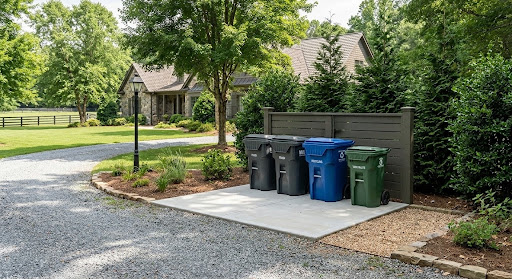
A commercial dumpster area needs more than an open space behind a building. Trash pad installation provides a stable, durable surface designed to support waste containers and withstand repeated use. Able Concrete of GA provides concrete services for property owners and businesses looking for dependable concrete solutions. A professionally constructed pad can help create a cleaner, more functional waste-management area while complementing the property’s overall site design.
Why Does a Dumpster Need a Concrete Pad?
Dumpsters are extremely heavy, especially when filled with waste. Repeated loading, unloading, and movement by collection trucks can put significant stress on the ground beneath them. Grass, soil, gravel, or poorly compacted surfaces can develop ruts, cracks, settling, and drainage problems.
A properly constructed concrete pad distributes the weight over a stable surface and provides a level area for the container. It can also make it easier for waste collection equipment to access the dumpster.
The exact dimensions and structural requirements should be determined according to the dumpster size, collection vehicle, site conditions, and applicable local requirements rather than relying on a one-size-fits-all design.
What Does Milton Require for Commercial Refuse Areas?
Milton’s Unified Development Code includes requirements for commercial and non-single-family properties that are important when planning a dumpster area. Refuse area enclosures must use the same exterior wall material as the building, while the enclosure door must use an opaque, non-combustible material and have an appearance consistent with the surrounding architecture.
The city also requires commercial projects to comply with applicable building and development requirements. Milton states that building permits help ensure construction meets safety and health standards, and the city currently enforces the applicable Georgia construction codes within city limits.
This means a dumpster project should be considered as part of the property’s overall site plan—not simply as a concrete-pouring project.
How Should a Trash Pad Be Designed?
A good trash pad should account for several practical considerations.
Strength: The slab needs adequate structural capacity for the dumpster and the expected loads from collection activity.
Size: The pad should provide sufficient space for the intended container while allowing appropriate clearance for loading, servicing, and enclosure components.
Access: Collection vehicles need enough room to approach and maneuver safely. Poor access can make routine waste pickup more difficult.
Drainage: Water should not accumulate around the dumpster. Proper grading and site drainage can help prevent standing water and deterioration around the pad.
Protection: Depending on the site, protective bollards or other barriers may help prevent vehicles or dumpsters from damaging nearby walls, doors, or structures.
These details should be coordinated before construction begins so the finished pad works with the dumpster and waste-hauling equipment.
Why Is Drainage Important Around a Dumpster Pad?
Water management is an important part of commercial site construction. A poorly graded pad can allow rainwater to collect around the dumpster, potentially creating muddy conditions, staining, erosion, or premature deterioration of surrounding areas.
The U.S. Environmental Protection Agency’s construction stormwater guidance emphasizes keeping waste and recyclable materials protected from stormwater and placing dumpsters away from stormwater conveyances and drains when appropriate.
For that reason, drainage should be considered during the planning stage instead of being treated as an afterthought.
Can a New Trash Pad Improve Property Appearance?
Yes. A well-planned dumpster area can make a commercial property look more organized and maintained.
Milton’s regulations specifically address the visual placement and screening of refuse areas. For commercial and non-single-family properties, dumpsters are subject to enclosure and screening requirements designed to reduce their visibility from public streets and nearby properties.
Combining a durable concrete pad with an appropriate enclosure can create a more professional waste-management area while helping the property meet applicable local standards.
Who Needs Professional Trash Pad Installation?
Restaurants, retail centers, office buildings, apartment communities, warehouses, churches, and other commercial properties may benefit from a properly designed dumpster pad. Businesses replacing an old, damaged slab or constructing a new waste area should evaluate the existing surface, drainage, access, and enclosure before beginning work.
Property owners should also verify current requirements with the City of Milton and their waste-hauling provider before construction. Dumpster dimensions and collection equipment can vary, and these factors can influence the required pad design.
Choose a Durable Concrete Solution
A dumpster area takes daily abuse that many property owners may not notice until the concrete begins cracking, settling, or becoming difficult to service. Investing in properly planned trash pad installation in Milton, GA can provide a stable foundation for commercial waste containers while supporting better access, drainage, durability, and property appearance. For concrete installation and related commercial concrete needs, contact Able Concrete of GA at (404) 694-8473 to discuss your project and get started with a dependable concrete solution.